Table Of Content
- Basic Elements of Design: Design Principles and Software Overview
- Immersive Experience Design: Expert Insights and Techniques
- Literature on design principles
- Repetition
- Basic Design Elements and the Principles of Design
- Hick’s Law: Making the choice easier for users
- How to Build a Website With AI: A Foolproof Guide

By using scale to make an element larger than others appearing with it, you can emphasise that element. Not only can you make an element stand out this way—you can also use scale to create a sense of depth (since nearer objects appear larger to the human eye). Exaggerated scales of images also add a certain level of interest and drama to them. Balance can be achieved by having symmetry in the design (for instance, having a webpage with centralised text and images). However, you can also achieve balance without symmetry — perhaps unsurprisingly, this is known as asymmetrical balance. We achieve asymmetrical balance when we arrange differently sized elements in a way that results in unity.
Basic Elements of Design: Design Principles and Software Overview
Be sure to emphasize the parts you want your users to look at first. You can do this through things like scale, white space, color, shadow, pattern, or other techniques. Designing for an organization, while requiring technical skill, is not just about knowing how to use a pagination program such as InDesign or manipulate photos using Photoshop.
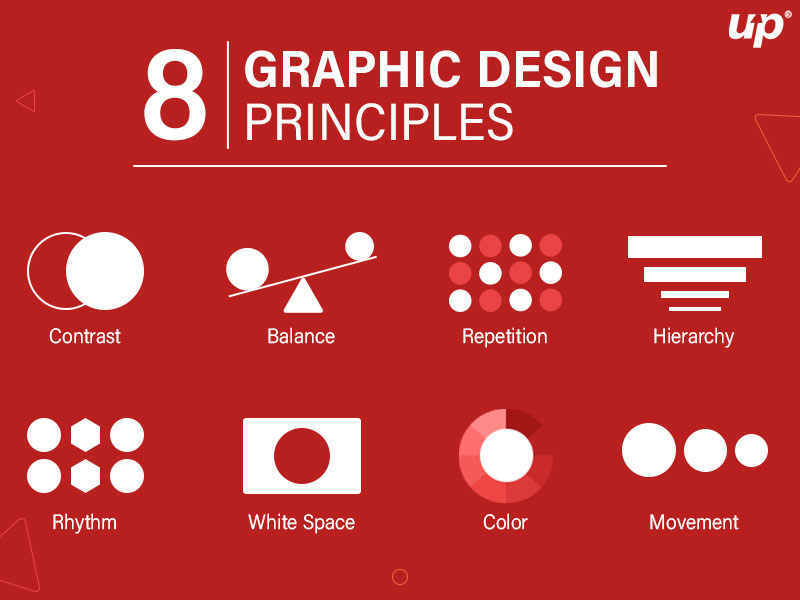
Immersive Experience Design: Expert Insights and Techniques
At the end of the day, that’s why we design things — we want people to use them to solve important problems. Fortunately, we can outline how certain color groups affect the majority of people. Lines can be thin and thick, horizontal, vertical, and diagonal, curved and zigzagged, dashed, and dotted — all of them can be used to convey meaning and shape experiences. Create advanced prototypes that can be quickly translated into code.
Literature on design principles
A World's First: NYK Completes Basic Design Process Using Only 3D Drawings for New Oceangoing Vessel NYK Line - Craig Senyk - News
A World's First: NYK Completes Basic Design Process Using Only 3D Drawings for New Oceangoing Vessel NYK Line.
Posted: Wed, 10 Apr 2024 07:00:00 GMT [source]
It can create balance, improve the standard or level of design, and reduce clutter. Designs with more white spaces are referred to as “clean” pieces of work. Every design in the world is different, and each artist adds their touch to their creations, yet, the principles of design remain the same. The human eye is naturally inclined to seek out proportions and balance and follow the natural progression of any piece of visual art.
NYK gets approval for 3D basic design drawings of multipurpose boxship - Offshore Energy
NYK gets approval for 3D basic design drawings of multipurpose boxship.
Posted: Mon, 15 Apr 2024 07:00:00 GMT [source]
Movement refers to the way a user’s eyes move across your composition. Dynamic designs encourage lots of eye movement, while static ones encourage less. The best designers can, to an extent, control which elements users focus on by placing them along the path of the most natural eye movement patterns. We tend to identify objects by their basic shapes, and only focus on the details (such as lines, values, colours and textures) on closer inspection. For this reason, shapes are crucial elements that we designers use for quick and effective communication. Achieving balance creates stability, harmony, and cohesion in a design.
Basic Design Elements and the Principles of Design
Franks Spillers’ design checklist is an example of customized design principles for mobile user experience (UX) design. While consistency and repetition are potent design principles, they also risk visual fatigue. Small doses of variety are helpful to ensure that your customers are not lulled to sleep. It forms the guidelines for designing your most essential and least significant aspects with the help of typography, color, contrast, images, and more. Rhythm defines the structure and discipline of repetitions to create desirable movements. It can also set the mood for the communications you are developing.
Balance is the equal distribution of visual weight (more specifically, how much any one element attracts the viewer's eye). Balance can be affected by many things, including color, size, number, and negative space. Use proportion to create visual interest by drawing the viewer’s eye to particular visual elements within your designs.
Shape
If there is no relationship between your two or more elements, your design will give a messy and unprofessional feel. So, to achieve unity, you should organize all your visual elements and make them work together in a single design composition. By repeating elements, you create a pattern and strengthen your design. Your ship should be balanced to move forward with ease, and the same goes for the visual elements of your design.
How to Build a Website With AI: A Foolproof Guide
Although simple, lines can possess a large variety of properties that allow us to convey a range of expressions. It is safe to assume that your clients have come a long way, experiencing various work from within your domain. They want to see their brand in a similar (if not better) light, and only you can make that happen.
While there’s a lot to debate in this viewpoint, one thing is for sure — the purpose of design is to solve problems. In today’s article, we’ll take a closer look at these rules, along with the building blocks of design that will help you create great products with little effort or experience. Luckily, hundreds of years of work with paintings and graphics have provided us with a series of vital rules that guide designers to this day. The fundamentals of design are all about the bigger picture—in other words, learning to appreciate the many small details that make up every composition. In everyday composition, the purpose of form is the same, but on a smaller scale. For example, a simple shadow can create the illusion of layers or give an object a sense of place.
It’s important to underline that you shouldn’t necessarily include all the principles in a design. However, using at least a few will guide you towards a more coherent and cohesive end-product. Start with minimal diversity and gradually introduce the smallest amount of typographic contrasts necessary to guide a person through the classes of the information displayed. Everything is made of shapes which, in turn, are made of lines. We can deconstruct the world we live in into a series of basic geometric and natural forms. Some designers go as far as to insist that there’s pretty much no overlap between the two.
People with vision impairments can have a difficult time reading text on a screen that is too small or does not have sufficient color contrast. There are accessibility tools available for checking that your designs have sufficient color contrast for accessibility purposes. Balance within a composition can be achieved in a couple of different ways. It’s achieved when elements on either side of a central vertical axis are basically the same. For example, two text blocks on either side of the page would create symmetrical balance, even if the content of those blocks wasn’t identical.
Designers establish a visual hierarchy by employing size, contrast, color, and spacing, directing attention and aiding comprehension. Balance in design principles refers to the distribution of visual weight within a composition. It ensures that elements are arranged in a way that doesn't make one side feel heavier than another.
You and your fellow course-takers have a huge knowledge and experience base between you, so we think you should take advantage of it whenever possible. Gestalt is the reason that we can see a square, circle and triangle even though the lines are not complete. We see the whole formed by the dotted lines first, before perceiving the separate dotted lines in each of the images.
It’s used to reinforce certain elements while also providing a sense of unity and continuity to your design. Repetition can be used to create rhythm, which helps move users through your designs. Designers should aim to understand how each of these design principles actually impact their work. Studying how other designers have implemented these ideas to structure their own designs is also an incredibly valuable tool in learning to create better designs. In some cases, negative space is used to create secondary images that may not be immediately apparent to the viewer. This can be a valuable part of branding that can delight customers.
To make your composition stable and engaging for your audience, you should create balance for your elements. Unity gives a design and sense of harmony, both visually and conceptually. Unity is important because it makes users feel at ease while navigating your design. Everything appears to be in its proper place and there are no jarring elements that stand out in a negative way. Sufficient contrast between elements, especially text and its background, is vital for creating an accessible design.